
March 30, 2026 – As workplace safety and asset protection grow in importance, rubber wheel chocks (also called rubber wheel stops or anti-roll devices) have become critical across global industries. From aviation aprons to home garages, these compact tools redefine vehicle security, preventing costly accidents and ensuring compliance with international safety standards. We explore their rising demand, versatile uses, and why 2026 is the year of this essential safety accessory.
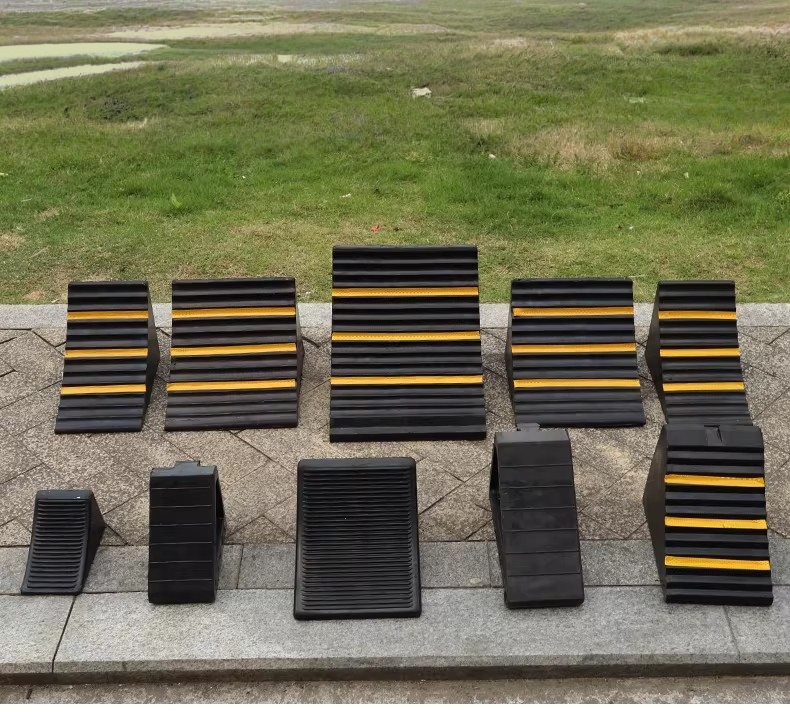
Market Growth Fueled by Safety Regulations and Industry Expansion
Industry reports show the global wheel chock market is accelerating, with rubber variants leading. Projections indicate growth from USD 134 million in 2025 to USD 151 million by 2031 (CAGR 2.0%), with rubber holding over 55% market share due to superior grip, durability and adaptability. Tightening safety regulations and expanding heavy-vehicle industries drive this growth.
OSHA and MSHA mandate wheel chocks for vehicles on grades or during loading/maintenance. Booming logistics, aviation and mining sectors—where 450-tonne vehicles are common—demand reliable anti-roll solutions. “Rubber wheel chocks are no longer optional; they’re a legal necessity,” notes a safety expert. “Their ability to withstand extreme conditions makes them industry-preferred.”
Why Rubber? The Unmatched Advantages Over Plastic, Wood, and Metal
Rubber outperforms other materials for strength, flexibility and safety, suiting industrial and residential use:
- Superior Grip & Stability: High friction, non-slip textures and concave designs ensure maximum tire/ground contact—even on uneven/wet terrain. Unlike plastic/wood, rubber conforms to surfaces, eliminating slippage.
- Durability & Weather Resistance: Vulcanized, high-pressure-molded natural/recycled rubber resists UV, extreme temperatures, oils and wear, lasting year-round indoors/outdoors without cracking or degrading.
- Vehicle Protection: Non-abrasive rubber prevents rim/body scratches, ideal for luxury vehicles, RVs and aircraft where asset protection matters.
- Portability & Ease of Use: Lightweight yet sturdy, many models have handles/eye bolts for easy transport. No professional installation is needed—deploy in seconds.
Multi-Industry Applications: One Chock, Endless Safety Solutions
Rubber wheel chocks adapt to diverse scenarios, making them indispensable across industries:
Aviation & Aerospace
Airports use rubber chocks to secure aircraft during parking/maintenance, meeting ICAO/FAA standards (yellow-black visibility, UV resistance). Contoured designs fit landing gear, preventing movement in high winds.
Mining & Construction
Mining sites rely on heavy-duty rubber chocks (up to 40kg) to secure haul trucks and machinery on rough terrain, complying with MSHA standards to prevent brake-failure accidents.
Logistics & Transportation
Warehouses and trucking fleets use rubber chocks for trailers/trucks during loading. Reflective models enhance visibility in dim areas, reducing misplacement risks.
Residential & Recreational Use
Homeowners, RV and boat owners use compact rubber chocks to secure vehicles on slopes, preventing rolling damage/injury. Easy storage makes them a garage essential.
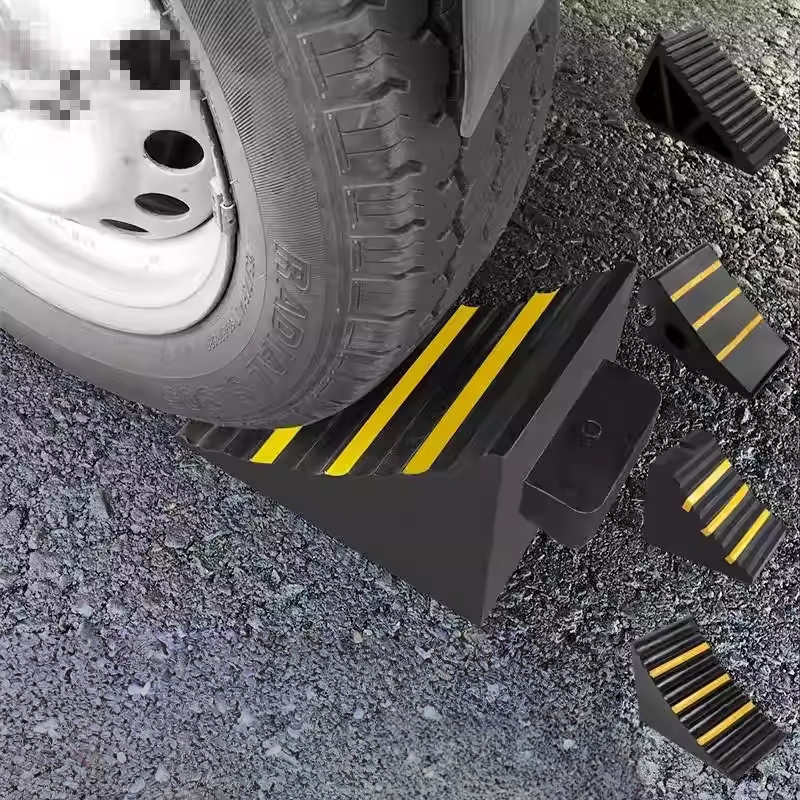
2026 Design Trends: Smart, Sustainable, and Customizable
2026 rubber chock designs focus on three key trends:
- Smart Integration: Embedded sensors monitor stability in real time, alerting systems to chock shifts—critical for aviation/industrial use.
- Sustainability: Manufacturers use >80% recycled rubber and non-toxic materials, reducing environmental impact without sacrificing performance.
- Customization: Adjustable heights, interlocking storage, color matching and size tweaks tailor chocks to specific vehicles (e.g., AGVs), minimizing loss.
2026 prioritizes safety, and rubber wheel chocks protect vehicles, assets and lives. Whether managing an industrial site or securing a home vehicle, they’re the simplest, most effective anti-roll solution.
Explore our rubber wheel chocks today to discover why global businesses and homeowners trust us. Follow our site for product updates and safety insights—your safer operation starts here.