Industry News – March 5, 2026
Traffic cones play a critical role in road safety and traffic management. Contractors and municipal authorities purchase traffic cones of specific sizes based on project type, vehicle speed, and safety standards. Size affects visibility, stability, and compliance of traffic cones. Selecting the appropriate height enhances safety in work zones and the efficiency of traffic control.
The following are the most commonly used traffic cone sizes in public works and construction projects.
45 cm (18-inch) Traffic Cones
Contractors typically use 45 cm traffic cones for light-duty tasks. This size is suitable for:
- Parking lots
- Warehouses
- Indoor facilities
- School zones
- Temporary guidance areas
45 cm traffic cones are easy to handle and deploy quickly. Staff can carry and stack them with ease. Municipal teams use them for short-term traffic diversion in low-speed areas.
However, this size is not suitable for highways or expressways, as visibility over long distances is reduced.
50 cm (20-inch) Traffic Cones
Many urban maintenance teams prefer 50 cm traffic cones for city road construction. This size is more visible than the 45 cm version while remaining easy to carry.
Common applications include:
- Urban street repairs
- Utility maintenance
- Pedestrian diversion
- Community events
Municipalities choose this size for daily operations as it balances cost and performance.
70 cm (28-inch) Traffic Cones
70 cm cones are among the most popular sizes for contractors. They offer good visibility and improved stability.
Applications include:
- Road construction
- Lane separation
- Medium-speed traffic zones
- Infrastructure repair projects
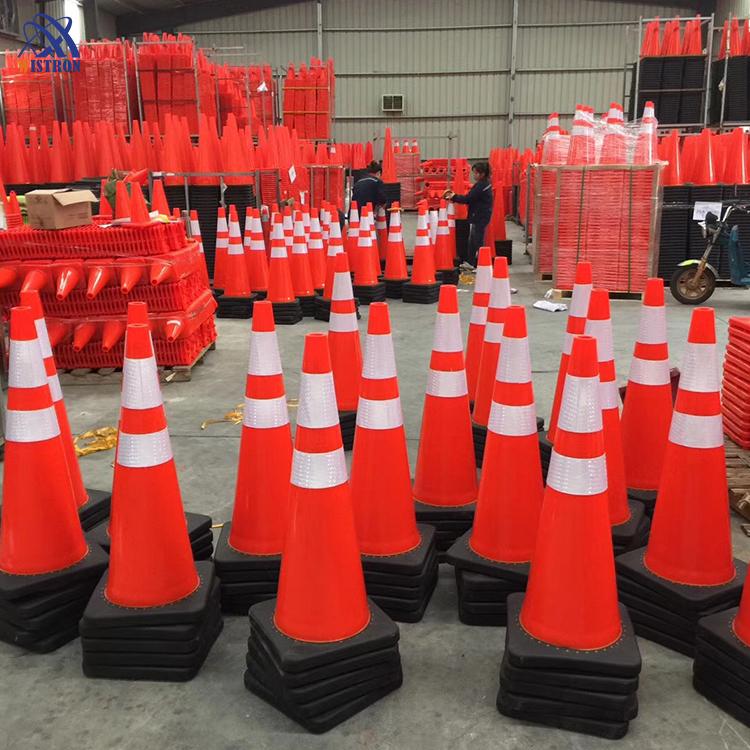
Most contractors choose 70 cm traffic cones with reflective collars. The increased height improves nighttime visibility, and the heavy rubber base enhances wind resistance.
This size complies with traffic control regulations in many regions.
75 cm Traffic Cones
75 cm traffic cones remain the top choice for municipal procurement. They provide higher visibility and stronger on-road warning effects.
Uses by authorities include:
- Highway maintenance
- Road marking work
- Long-term construction projects
- Emergency traffic control
Many cities list 75 cm traffic cones as standard equipment. This size works well in both urban and semi-expressway environments.
A typical 75 cm cone includes a heavy-duty 36×36 cm base for stability.
90 cm (36-inch) Traffic Cones
Highway authorities usually require 90 cm traffic cones. This size delivers maximum visibility and safety on high-speed roads.
Applications include:
- Highways
- Major road projects
- Airport runways
- Large-scale infrastructure projects
Drivers can see 90 cm traffic cones from far away, allowing earlier reaction times. These cones are often used with LED lights for nighttime work.
Although heavier, this size offers superior stability and compliance in strict safety environments.
Material Factors
Contractors and municipal buyers also pay close attention to material quality. The most common materials include:
- PVC: Flexible and impact-resistant
- PE: Lightweight and weather-resistant
- PP: Durable and cost-effective
PVC cones dominate government bulk purchases due to their flexibility and ability to recover after impact. PE cones perform well in hot climates. PP cones are ideal for temporary or budget-limited projects.
Material choice directly impacts service life and maintenance costs.
Reflectivity Requirements
Most municipal projects require reflective collars. Highways need larger reflective surfaces, and nighttime work demands high-brightness performance.
Buyers typically specify:
- Single or double reflective bands
- High-intensity reflective film
- Compliance with local traffic regulations
Reflective materials improve visibility and reduce accident risks.
How Contractors Choose the Right Size
Procurement teams evaluate:
- Road speed limits
- Project duration
- Traffic density
- Weather conditions
- Storage capacity
- Budget allocation
Higher speeds require taller traffic cones. Long-term projects need heavier bases. Urban areas can use medium sizes. Highway projects require 75 cm or 90 cm cones.
Conclusion
Contractors and municipal authorities purchase traffic cones based on safety needs and regulatory standards. The most common sizes are 45 cm, 50 cm, 70 cm, 75 cm, and 90 cm. Among them, 70 cm and 75 cm cones are most widely used for public road projects. Highway authorities typically select 90 cm cones for optimal visibility.
Choosing the right traffic cone size improves traffic flow, protects workers, and ensures regulatory compliance. It also reduces replacement costs and boosts operational efficiency. For any public works project, properly sized traffic cones support safer and more professional road management.