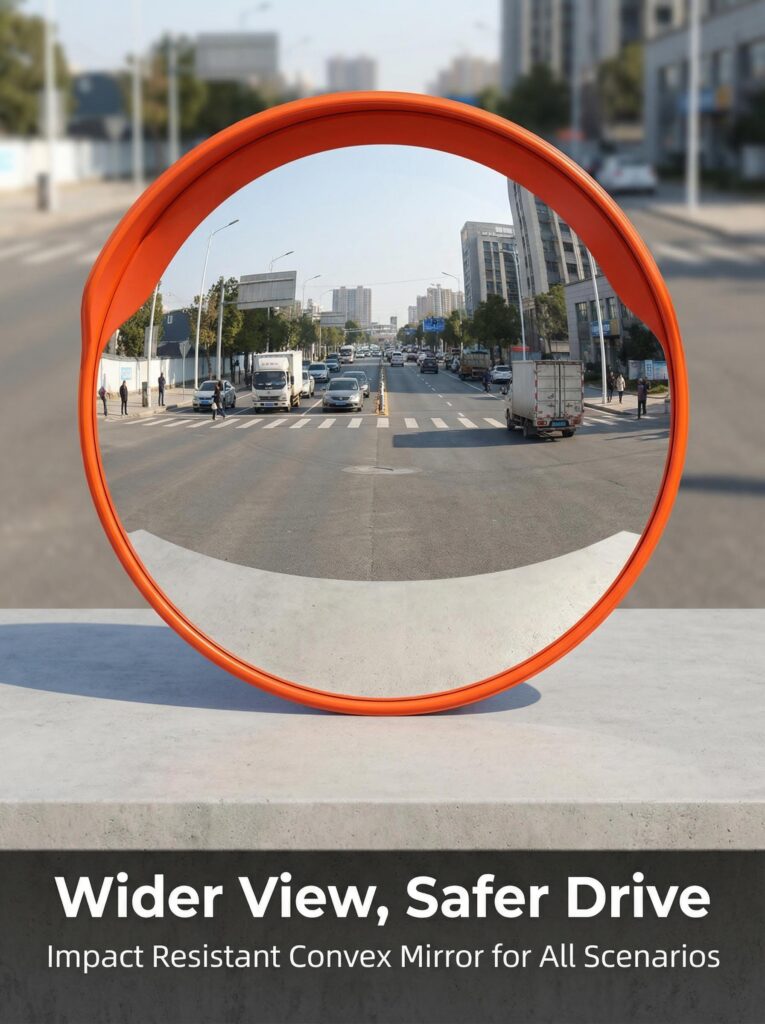
In today’s increasingly dense traffic, blind spots in areas such as road corners, intersections, parking lot entrances and exits, and community lanes have become one of the main causes of traffic accidents. The traffic wide-angle mirror (also known as safety convex mirror, turning mirror), as a low-cost and high-efficiency traffic safety facility, with its core advantage of ultra-wide viewing angle, silently guards every section of the road, and has become an indispensable “safety sentinel” for municipal traffic, property parks, and factory areas. It does not require complex installation or special personnel on duty, but can maximize the elimination of blind spots and early warning of traffic risks, solving key pain points in road safety with a simple design.
What is a Traffic Wide-Angle Mirror? Core Definition and Working Principle
A traffic wide-angle mirror is a convex reflective mirror specially designed for road safety. It is fundamentally different from ordinary plane mirrors and wide-angle lenses for photography. Its mirror surface is outwardly convex. Using the principle of light reflection, it expands the field of view originally blocked by walls, guardrails, and curves to the visible range of drivers or pedestrians through mirror reflection, achieving a safety effect of “seeing through walls” and avoiding traffic accidents such as collisions and scratches caused by blocked vision from the source.
Compared with traditional security facilities, traffic wide-angle mirrors have the core characteristics of simple structure, controllable cost, and strong adaptability. They do not require power drive and can work 24/7 relying on physical reflection. Whether it is high-temperature exposure, heavy rain, or severe cold, they can work stably. Its core advantage lies in “solving major hidden dangers with small costs”. Only one compliant wide-angle mirror can cover the blind area within tens of meters, greatly reducing road traffic risks, and it is a cost-effective safety investment.
It is worth noting that the commonly used term “concave-convex mirror” in the industry is actually a habitual abbreviation for traffic wide-angle mirrors. Truly compliant traffic wide-angle mirrors are all unidirectional convex designs. Concave mirrors are completely unsuitable for road safety scenarios because they converge light and narrow the field of view, which is also a misunderstanding that needs to be avoided when purchasing.
Core Value of Traffic Wide-Angle Mirrors: More Than “Seeing”, But “Preventing Troubles Before They Occur”
For municipal traffic management departments, property enterprises, and factory parks, the value of traffic wide-angle mirrors is far more than “expanding the field of view”, but also reflected in three aspects: risk prevention and control, efficiency improvement, and responsibility demonstration. It is a safety solution that balances practicality and economy.
1. Eliminate Blind Spots and Reduce Accident Rate from the Source
This is the core value of traffic wide-angle mirrors. In areas with blocked vision such as mountain sharp bends, urban narrow lanes, intersections, and parking lot entrances and exits, drivers cannot observe vehicles, pedestrians, or non-motor vehicles in the blind spots with the naked eye, which is very likely to cause traffic accidents. The traffic wide-angle mirror can expand the viewing angle to 120°-180°, allowing drivers to find traffic targets in the blind spots 3-5 seconds in advance, with sufficient time to decelerate and avoid, effectively reducing the incidence of collisions, scratches, and other accidents. Data shows that the incidence of traffic accidents at curves and intersections where compliant traffic wide-angle mirrors are installed can be reduced by more than 60%, especially in densely populated areas such as communities and school surroundings, the protection effect is more significant.
2. No Need for Special Personnel on Duty, Reducing Management Costs
Compared with security facilities such as surveillance cameras and intelligent early warning equipment that require power and network support and special personnel for maintenance, traffic wide-angle mirrors adopt the principle of pure physical reflection. After installation, they do not require any follow-up maintenance or power consumption, with one-time investment and long-term benefits. For scenarios with limited budgets such as property parks, factory areas, and rural roads, traffic wide-angle mirrors do not require complex debugging, are easy to install, can quickly achieve blind spot coverage, greatly reducing the manpower and material costs of traffic management, and are the preferred low-cost security solution.
3. Adapt to Multiple Scenarios, Balancing Warning and Protection
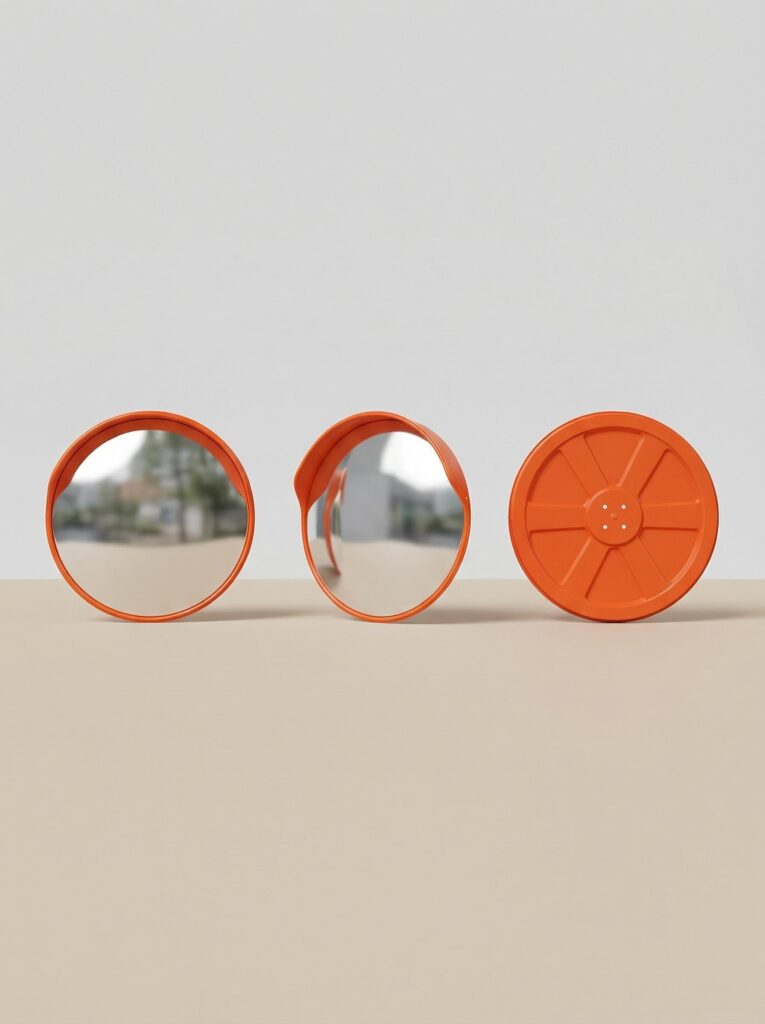
Traffic wide-angle mirrors have strong adaptability. Products of different sizes and materials can be selected according to the needs of different scenarios to achieve full-scenario coverage. At the same time, the back of the mirror is mostly painted in bright colors such as orange and red, and the mirror body is equipped with warning signs, which can be found by drivers from a distance. It can not only play a reminder role, but also strengthen the road safety warning effect, standardize the traffic behavior of vehicles and pedestrians, balance the dual functions of protection and warning, and further improve traffic safety and orderliness.
4. Demonstrate Responsibility and Improve Scene Professionalism
For municipal units, installing traffic wide-angle mirrors is a concrete manifestation of practicing refined road safety management, demonstrating attention to the travel safety of citizens; for property enterprises and factory parks, the reasonable deployment of traffic wide-angle mirrors can not only avoid potential safety hazards and reduce safety disputes, but also improve the management professionalism of the park and factory area, enhance the sense of security of users and employees, establish a responsible brand image, and indirectly improve reputation and recognition.
Product Classification of Traffic Wide-Angle Mirrors: Select Models According to Scenarios for Precise Adaptation to Needs
With the upgrading of road safety needs, traffic wide-angle mirrors have formed a diversified product system, mainly divided into the following categories according to installation scenarios, mirror size, and material. Products of different types are suitable for different use scenarios, which can accurately meet the needs of different users such as municipal, property, and factory, avoiding poor protection effect caused by blind model selection.
1. Classification by Installation Scenarios (Core Classification)
- Outdoor Road Type: Specially designed for outdoor roads, suitable for mountain sharp bends, urban intersections, rural roads, highway toll stations and other scenarios. It has the characteristics of sun resistance, impact resistance, corrosion resistance, waterproof and dustproof, and can resist severe weather such as typhoons, heavy rains, high temperatures, and severe cold. The mirror body is mostly equipped with a mirror cover, which can effectively reduce the discomfort of drivers caused by sunlight irradiation, and avoid water accumulation on the mirror surface affecting the field of view in rainy days. It is the most widely used type.
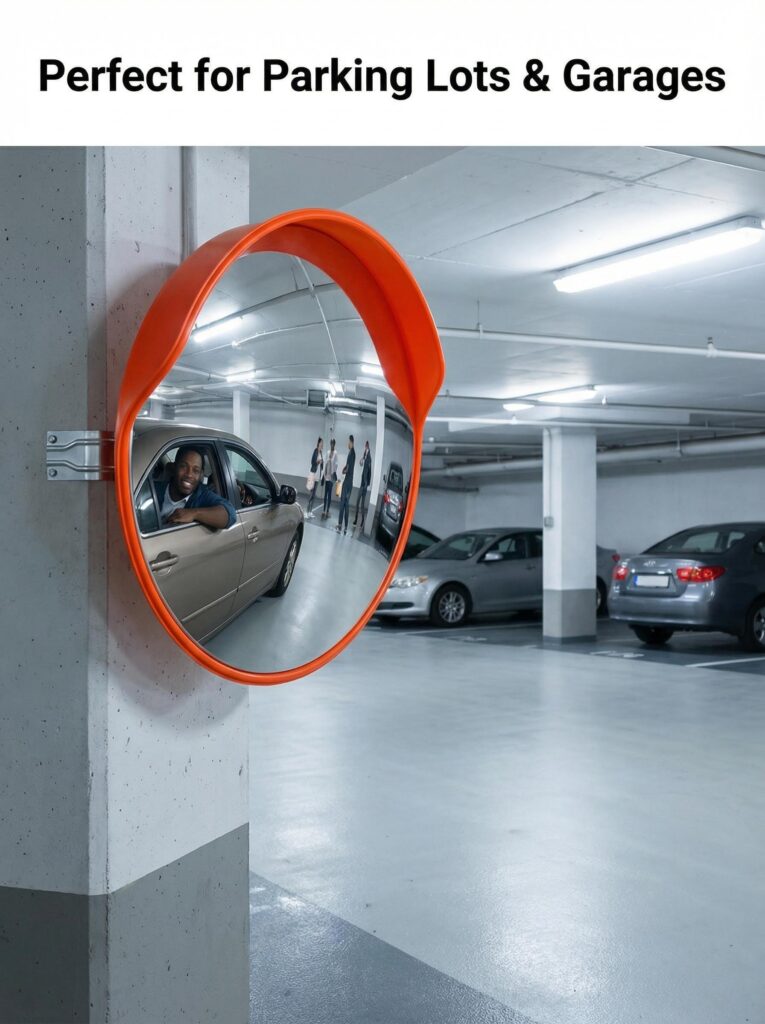
- Indoor Park Type: Suitable for indoor scenarios such as community corridor corners, underground parking lots, factory workshops, and supermarket warehouses. It is relatively small in size, high in mirror clarity, focusing on solving indoor blind spots, and flexible in installation. It can be wall-mounted or column-mounted. It can not only avoid the risk of personal collision and vehicle scratches, but also assist in monitoring dead corners, improving indoor traffic and management safety.
- Special Scenario Type: Designed for special scenarios with dense personnel and vehicles such as school surroundings, hospital entrances, and logistics parks. It has a larger mirror size and wider field of view. Some products can be equipped with LED warning lights to enhance the night warning effect, further improve traffic safety, and adapt to the needs of high-traffic and high-risk special traffic scenarios.
2. Classification by Mirror Size (Choose on Demand, Refuse Waste)
- 60cm Diameter: Small wide-angle mirror, suitable for scenarios with small field of view such as community corridors, underground parking lot passages, and small factory workshops. It is flexible to install and low in cost, and can meet the needs of short-distance blind spot coverage. Its 120° field of view can fully cover the width of two lanes and the depth within 12 meters, suitable for scenarios with a speed ≤ 30km/h.
- 80cm Diameter: Medium wide-angle mirror, suitable for scenarios such as community entrances and exits, rural roads, and main roads of factory areas. It has a moderate field of view coverage, balancing practicality and economy, and is the most commonly used size. The viewing distance can extend to more than 25 meters, which can simultaneously monitor the dynamics of three lanes and non-motor vehicle lanes, suitable for scenarios with medium vehicle speed.
- 100cm and Above Diameter: Large wide-angle mirror, suitable for scenarios with large blind spots and dense traffic such as urban intersections, mountain sharp bends, highway toll stations, and large logistics parks. It has a wide field of view coverage and more prominent warning effect, which can effectively cover large-scale blind spots and avoid safety risks in high-traffic scenarios, suitable for outdoor scenarios with fast vehicle speed.
3. Classification by Mirror Material (Determines Durability and Imaging Effect)
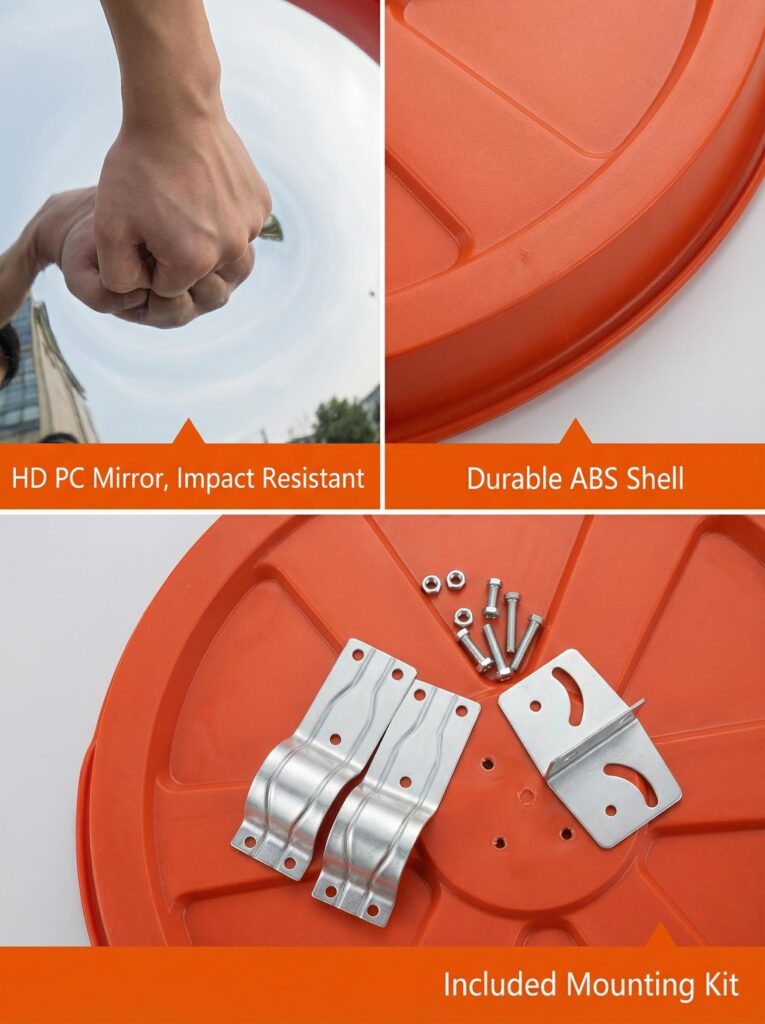
- PC Material Mirror: Currently the mainstream material in the market, it has the characteristics of impact resistance, not easy to break, clear image, and not easy to deform. When subjected to external impact, the lens will be concave, and can quickly return to its original shape after the external force is removed, completely solving the pain point that traditional glass mirrors are easy to break. At the same time, it has UV resistance and aging resistance, suitable for long-term outdoor use. It is the most cost-effective choice and the preferred material for most compliant products, widely used in various outdoor scenarios.
- Acrylic Material Mirror: High clarity, light weight, easy to install, and good weather resistance, suitable for indoor scenarios or mild outdoor scenarios, but its impact resistance is slightly inferior to PC material. It is not suitable for outdoor road scenarios with frequent vehicle traffic and easy collisions, and is mostly used in indoor corridors, small warehouses and other areas.
- Glass Material Mirror: Extremely high clarity, but high brittleness and easy to break. Once hit, it will be damaged, with high maintenance costs. At present, it has been gradually replaced by PC and acrylic materials, and is only suitable for indoor scenarios without collision risks, with a narrow application range, not recommended for outdoor use.
How to Choose a Traffic Wide-Angle Mirror? Core Buying Guide (Must Read to Avoid Pitfalls)
The traffic wide-angle mirror products on the market are uneven, with prices ranging from tens of yuan to hundreds of yuan. If purchased blindly, it will not only fail to achieve the protection effect, but also may cause potential safety hazards due to product quality problems. The following core purchasing points help municipal units, property enterprises, and engineering parties select models accurately, balancing practicality, durability, and cost-effectiveness, and avoiding pitfalls.
1. Prioritize Material: Choose PC for Outdoor, Acrylic for Indoor
For outdoor scenarios (roads, community entrances and exits, mountain sharp bends), priority should be given to PC material mirrors. The back of the mirror is made of ABS engineering plastic or FRP material, which has the characteristics of impact resistance, sun resistance, corrosion resistance, and never rusting, can adapt to harsh outdoor weather, and extend the service life; the color of the mirror back is preferably bright orange or red to enhance the warning effect. For indoor scenarios (underground parking lots, corridors), acrylic material can be selected, which is light in weight, high in clarity, and easy to install, which can meet the needs of indoor blind spot coverage, and there is no need to pursue excessive impact resistance.
2. Choose Size According to Scenario: Do Not Blindly Pursue “The Larger the Better”
The size selection should be comprehensively judged according to the size of the blind spot, traffic flow, and vehicle speed of the scenario, not the larger the better: choose 60cm diameter for scenarios with small blind spots and less traffic (corridors, small parking lots); choose 80cm diameter for scenarios with medium blind spots and moderate traffic (community entrances and exits, rural roads); choose 100cm and above diameter for scenarios with large blind spots and dense traffic (intersections, mountain sharp bends). At the same time, it is necessary to consider the space constraints of the installation location to avoid the installation height being forced to increase due to the excessively large mirror body, which will instead aggravate the depression angle blind spot. The optimal size and installation location can be determined through on-site survey.
3. Pay Attention to Core Details: Imaging, Installation and Protection
- Imaging Effect: High-quality traffic wide-angle mirrors have clear imaging and no obvious distortion, with a reflectivity ≥ 65%, which can truly restore the blind spot scene and avoid driver misjudgment caused by blurred imaging and distortion; inferior products have blurred imaging and serious deformation, which will instead increase potential safety hazards. When purchasing, the imaging effect can be tested on site to ensure no obvious distortion and blurriness.
- Installation Convenience: Priority should be given to products with built-in brackets (wall-mounted brackets, column brackets). The bracket material is stainless steel or hot-dip galvanized material, which is corrosion-resistant and not easy to rust. Installation does not require complex tools and can be completed quickly; for outdoor installation, a bracket with adjustable angle should be selected to facilitate adjusting the mirror angle according to the on-site blind spot to ensure maximum field of view coverage. Usually, the optimal mirror pitch angle is 5°–8°, and the blind spot coordinates can be located by laser rangefinder to accurately calibrate the installation angle.
- Protection Performance: Outdoor products need to have waterproof, dustproof, and UV protection functions. The back of the mirror is reserved with diversion grooves and drain holes to avoid dew and water accumulation on the inner wall of the mirror affecting the field of view in rainy days; some high-end products can choose nano hydrophobic coating technology to improve the self-cleaning efficiency of the mirror surface and reduce the maintenance frequency in high-dust scenarios; the bracket needs to have sufficient load-bearing capacity, which can resist severe weather such as typhoons and strong winds in outdoor scenarios, avoid the mirror body falling off and being damaged. The foundation of the pole is recommended to be independently cast with C25 concrete to enhance stability.
4. Balance Cost-Effectiveness: Reject “Low-Price and Inferior Quality”, Prioritize Compliant Products
Low-price and inferior traffic wide-angle mirrors (mostly glass or inferior PC materials) have short service life, blurred imaging, and are easy to damage. They not only need to be replaced frequently, but also may cause traffic accidents due to inadequate protection, which will increase costs instead. It is recommended to choose compliant products that meet the national standard GB/T “Reflective Mirrors for Road Traffic”, and prioritize products with brands and after-sales services. Although such products are slightly higher in price, they have excellent materials, clear imaging, long service life, and guaranteed after-sales service, which are more cost-effective in the long run. The price of ordinary outdoor traffic wide-angle mirrors is about 20-50 US dollars, and the price of large-scale compliant products is about 100-200 US dollars. They can be reasonably selected according to the budget and scenario needs, avoiding sacrificing safety performance and service life due to low prices.
Installation and Maintenance of Traffic Wide-Angle Mirrors: Simple Operation, Long-Term Protection
The installation and maintenance of traffic wide-angle mirrors are extremely simple, no professional technicians are needed, and ordinary people can complete them. Only the following points need to be paid attention to to ensure their long-term stable operation and achieve long-term protection.
Installation Points
- Installation Height: For wide-angle mirrors at outdoor roads and community entrances and exits, the recommended installation height is 1.5-2.0 meters to ensure that both drivers (sitting posture) and pedestrians (standing posture) can clearly see the mirror content, avoiding incomplete field of view coverage due to too high or too low installation; the installation height of wide-angle mirrors in indoor corridors and parking lots can be adjusted according to the scenario, which is based on the ability to clearly cover the blind spot, usually installed above the corner to ensure no obstruction.
- Installation Location: Priority should be installed directly in front of the blind spot to ensure that the mirror can cover the blind spot to the maximum extent without obstacles (such as branches, billboards); at curves, it should be installed on the outside of the curve to allow drivers to see vehicles and pedestrians on the inside of the curve in advance; at parking lot entrances and exits, it should be installed at the corner of the entrance and exit to cover the field of view inside and outside the entrance and exit, avoiding collisions when vehicles enter and exit; during installation, “two-point line of sight analysis” should be carried out, with the driver’s and pedestrian’s eye positions as the benchmark, and the installation height and inclination angle of the mirror center should be deduced in reverse to eliminate the extensive mode of “install and use”.
- Fixing Method: Wall-mounted is suitable for scenarios with flat walls (corridor, parking lot walls), and column-mounted is suitable for scenarios without walls (roads, community squares). When fixing, ensure that the bracket is firm to avoid mirror shaking. For outdoor column-mounted installation, the base needs to be reinforced to resist strong winds and external impacts, preventing the mirror body from falling off and causing potential safety hazards. Especially in soft soil foundation scenarios, concrete pouring base should be adopted to enhance stability, which can resist the lateral thrust of level 12 typhoons.
Maintenance Points
- Regular Cleaning: Outdoor wide-angle mirrors are prone to dust and rain stains. It is recommended to clean them once a month, gently wipe them with a soft cloth or sponge dipped in warm water, avoid using corrosive cleaners to prevent damage to the mirror coating and affect the imaging effect; the cleaning frequency can be appropriately increased in high-dust and rainy scenarios, and nano hydrophobic coating products can reduce the number of cleanings and lower maintenance costs.
- Regular Inspection: Inspect the mirror body and bracket once a quarter to check if the mirror body is damaged or scratched, and if the bracket is loose or rusted. If problems are found, replace or repair them in time; for outdoor products, after severe weather such as typhoons and heavy rains, focus on checking the firmness of the bracket and the integrity of the mirror body to ensure no damage or looseness, and adjust the mirror angle in time to avoid field of view deviation caused by external forces.
- Timely Replacement: If the mirror surface has serious scratches, damage, blurred imaging or distortion and cannot be used normally, it must be replaced in time to avoid traffic accidents caused by failure of protection; although PC material mirrors are impact-resistant, after long-term use (5-8 years), if they are aged and yellowed, they also need to be replaced in time to ensure imaging effect and protection performance and extend the overall protection cycle.
Industry Trends: Future Development Direction of Traffic Wide-Angle Mirrors
With the rapid development of smart cities and intelligent transportation, traffic wide-angle mirrors are constantly upgrading. Combined with policy guidance and technological iteration, they will present three major development trends in the future, which are more in line with the refined management needs of modern road safety, providing more efficient and intelligent protection solutions for municipal, property and other users.
1. Intelligent Upgrading: Integrate Technology to Improve Protection Efficiency
In the future, traffic wide-angle mirrors will gradually integrate with intelligent monitoring, AI early warning and other technologies to launch intelligent wide-angle mirror products. Such products not only have the field of view expansion function of traditional wide-angle mirrors, but also can real-time monitor traffic flow and pedestrian flow through built-in sensors. When detecting vehicles or pedestrians approaching in the blind spot, they will automatically issue voice warnings (such as “Please pay attention to vehicles in the blind spot”) to further improve the safety protection effect; at the same time, they can be linked with the background management system to realize remote monitoring, facilitating managers to real-time check the traffic situation of each point, improving management efficiency, adapting to the development needs of intelligent transportation and smart cities, especially in large logistics parks, urban main roads and other scenarios, with broad application prospects.
2. Environmental Protection and Localization: Align with Green Development and Reduce Supply Chain Risks
Under the guidance of the national green development policy, environmentally friendly and degradable materials will be gradually applied to the production of traffic wide-angle mirrors, replacing traditional plastic materials to reduce environmental pollution; at the same time, the localization rate of high-refractive-index optical glass and PC materials is constantly improving. In 2024, the localization rate of relevant core materials has reached 58.7%, which effectively reduces supply chain risks, improves product cost-effectiveness, and enables more scenarios to achieve full coverage. In addition, energy-saving and low-loss production processes will become the industry norm, in line with global green development requirements. Products with low-carbon certification will gain more market recognition, and the premium space will gradually increase, promoting the industry to develop in a green and sustainable direction.
3. Scenario-Based Customization: Precise Adaptation to Improve Protection Targeting
Different scenarios have great differences in blind spot characteristics, traffic flow, and traffic needs. In the future, traffic wide-angle mirrors will develop towards scenario-based customization. For example, for mountain sharp bends, launch customized products with large size and high weather resistance, equipped with anti-skid and anti-strong wind brackets; for school surroundings, launch customized products with LED warning lights and children’s safety signs to enhance the night warning effect; for logistics parks, launch customized products that can cover the blind spots of large vehicles, adapting to the traffic needs of large vehicles such as forklifts and trucks. At the same time, enterprises will provide a full-process closed-loop service from demand survey, customized model selection to installation and delivery, improving product adaptability and user experience, meeting the personalized protection needs of different scenarios, promoting the industry to transform from “standardization” to “refinement”, and further improving the level of road safety management.
Conclusion: One Wide-Angle Mirror, Guarding Thousands of Roads
Traffic wide-angle mirrors, although seemingly simple traffic facilities, bear important responsibilities for road safety. They have no complex structure or high cost, but can eliminate blind spots, avoid traffic risks, and guard the travel safety of every driver and pedestrian in the most direct and efficient way, becoming an indispensable “safety sentinel” for municipal traffic, property parks, and factory areas.
Choosing a suitable traffic wide-angle mirror is not only a guarantee for traffic safety, but also a practice of responsibility. Whether it is municipal units promoting refined road safety management, property enterprises improving the safety level of the park, or engineering parties improving the project security facilities, traffic wide-angle mirrors are the most cost-effective choice.
We focus on the R&D and production of high-quality traffic wide-angle mirrors, covering products of various scenarios, sizes, and materials. We strictly follow national standards for production to ensure that each product can stably play a protective role. We provide full-process services from model selection, installation to after-sales, helping every scenario build the first line of road safety defense, making traffic safer and more orderly.