
In the realm of modern traffic safety, solar road studs (also known as solar raised pavement markers or solar cat’s eyes) represent a revolutionary leap from passive reflection to active illumination. As self-powered, intelligent traffic safety facilities, they eliminate the visibility limitations of traditional road markings in dark, rainy, or foggy conditions, providing drivers with unparalleled guidance and significantly reducing nighttime accident rates. Combining solar energy, LED lighting, and durable engineering, these compact yet powerful devices have become an indispensable component of smart, safe, and sustainable road infrastructure worldwide.
What Are Solar Road Studs?
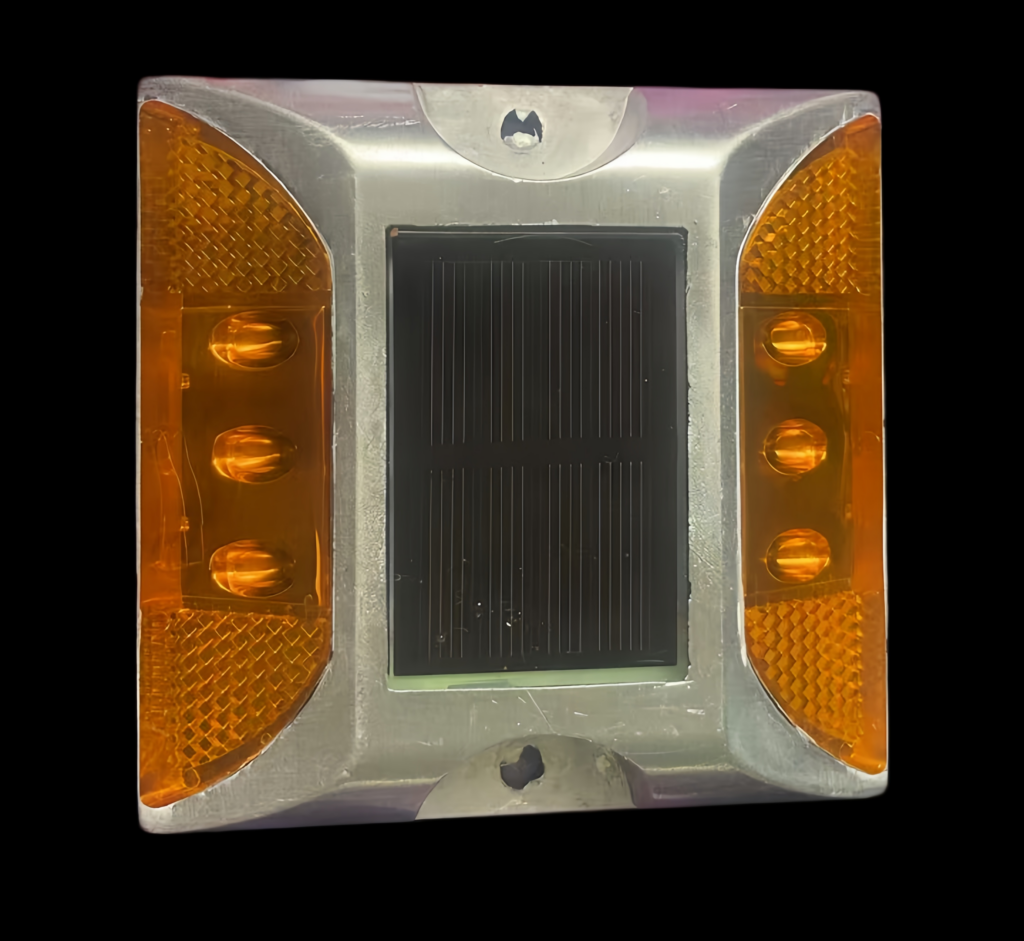
A solar road stud is a compact, pavement-mounted safety device that integrates solar photovoltaic panels, energy storage cells (batteries or supercapacitors), high-brightness LEDs, a light sensor, and a heavy-duty housing.
Core Working Principle
- Daytime Charging: The solar panel absorbs sunlight and converts it into electrical energy, which is stored in the internal battery or capacitor.
- Nighttime Activation: A built-in photosensitive controller automatically switches on the LEDs at dusk or in low-light conditions.
- Active Illumination: The LEDs emit bright, steady or flashing light (typically 1–2Hz) to clearly mark road edges, lane divisions, and hazards.
- All-Weather Performance: They continue to operate reliably for 5–10 consecutive days on a full charge, even during prolonged rainy or cloudy periods.
Unlike traditional reflective “cat’s eyes,” which depend entirely on vehicle headlights, solar road studs actively emit light, making them visible from 500+ meters away—far beyond the range of standard road markings.
Unmatched Advantages Over Traditional Safety Markers
1. Superior Visibility & All-Weather Reliability
- Brightness: Emits 2,000–8,000 mcd of light, 6–7 times brighter than the 300–400 mcd reflection of passive studs.
- Penetration: Cuts through heavy rain, fog, and snow, maintaining visibility when standard markings fail.
- Distance: Creates a visible “light path” for drivers up to 500 meters in advance, providing 3–5 seconds of extra reaction time.
2. Self-Powered & Eco-Friendly
- Energy Independent: Requires no wiring, external power, or grid electricity.
- Sustainable: Runs on clean solar energy, reducing carbon emissions. A 1km stretch can save approximately 2 tons of CO₂ annually.
- Long Life: High-quality models last 5–10 years, with minimal degradation.
3. Extreme Durability & Cost-Effectiveness
- High Compression Strength: Premium cast-aluminum models withstand 30–50 tons of pressure, resisting damage from heavy trucks.
- Weatherproof: IP68 waterproof and dustproof rating, operable in temperatures from -40°C to 80°C.
- Low Maintenance: Once installed, they require only occasional cleaning. No electricity bills or frequent replacements.
4. Intelligent Warning & Flexibility
- Dynamic Flashing: The blinking light is far more attention-grabbing than static lines, especially on dangerous curves.
- Color Coding: Available in red, yellow, white, green, and blue for specific traffic meanings.
- Red: Road edges, no-entry zones, hazards.
- Yellow/Amber: Lane dividers, central medians.
- White: Lane edges, pedestrian crossings.
- Easy Installation: Can be glued or screwed down in minutes, with no road excavation needed.
Key Types & Material Selection
Solar road studs are categorized primarily by housing material, which dictates their load-bearing capacity and ideal application.
1. Cast Aluminum Solar Road Studs (Heavy-Duty)
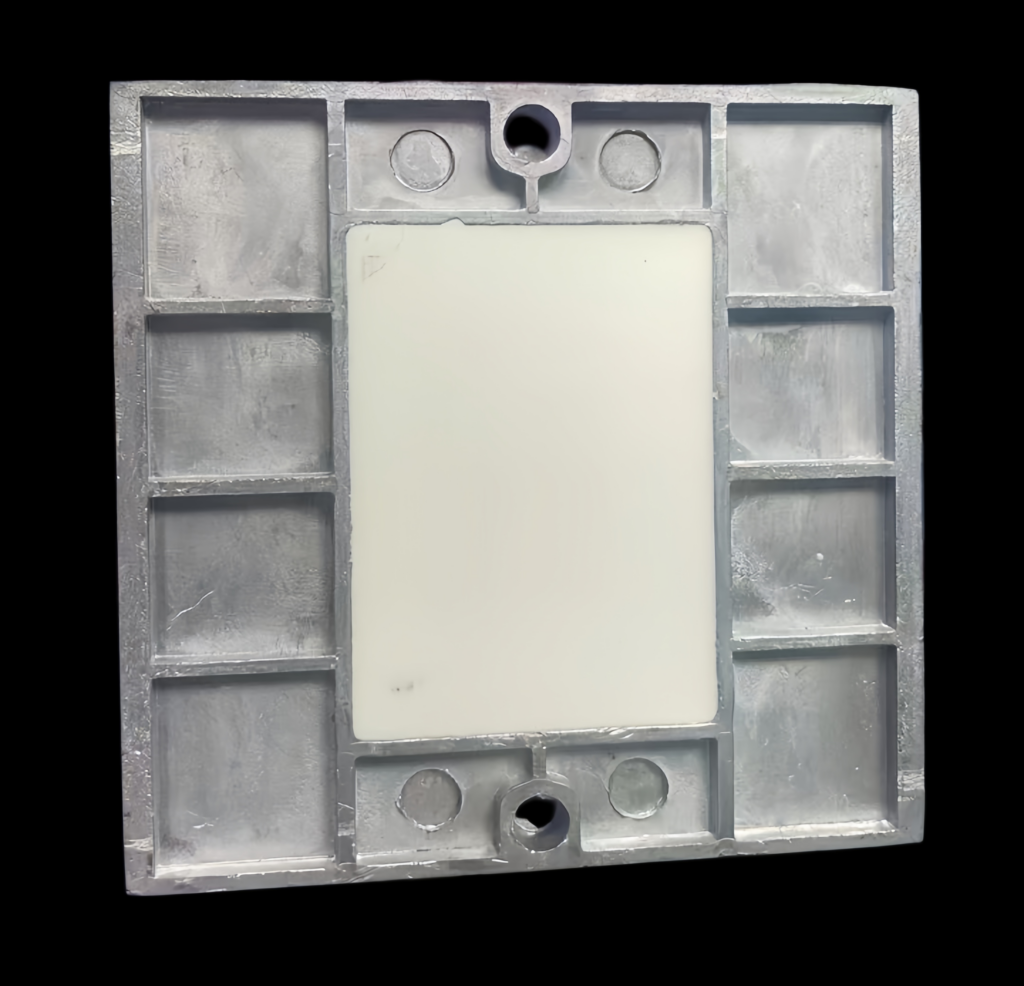
- Material: ADC12 die-cast aluminum with anti-corrosion coating.
- Compression: 30–50 tons (for highways and heavy traffic).
- Best For: Highways, motorways, mountain roads, busy intersections.
- Lifespan: 8–10 years.
2. PC/ABS Plastic Solar Road Studs (Economical)
- Material: High-impact polycarbonate or engineering plastic.
- Compression: 10–20 tons (for light to medium traffic).
- Best For: Urban roads, residential areas, parking lots, parks.
- Advantage: Lighter, lower cost, easy to handle.
3. By Energy Storage
- Lithium Battery (Li-ion / LiFePO4): Most common, 3–8 year lifespan, works for 7–10 days without sun.
- Supercapacitor: Longer lifespan (7–10 years), extreme temperature tolerance, but higher cost.
Primary Applications
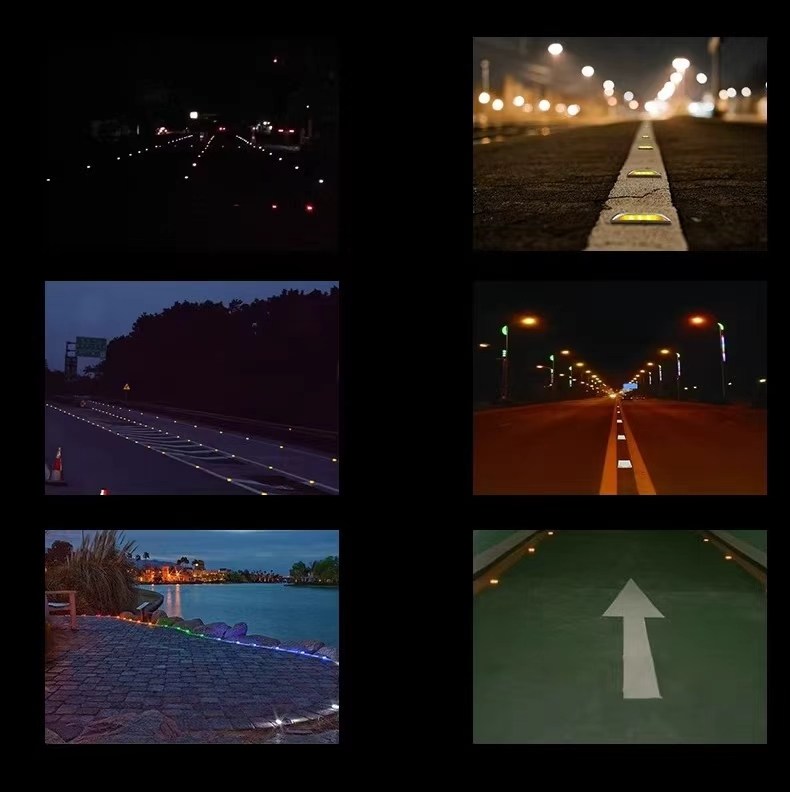
Solar road studs are versatile enough for nearly any scenario requiring enhanced nighttime visibility:
- Highways & Motorways: Marking edges and lane dividers.
- Mountain & Rural Roads: Illuminating sharp curves, steep slopes, and blind spots.
- Urban & Municipal Roads: Detailing intersections, crosswalks, and bus lanes.
- Parking Lots & Garages: Guiding traffic flow and marking parking bays.
- Bridges & Tunnels: Enhancing guidance at entrances/exits.
- Ports & Industrial Yards: Lighting dark, high-traffic zones.
- Residential & Community Roads: Improving safety for pedestrians and vehicles.
How to Select the Right Solar Road Stud
1. Match Material to Traffic Load
- Highways/Heavy Traffic: Cast Aluminum (≥30 tons compression, IP68).
- Urban/Residential: PC/ABS Plastic (cost-effective, sufficient strength).
2. Check Critical Specifications
- Solar Panel: Monocrystalline silicon (efficiency 18–22%) for maximum charging.
- LED Brightness: ≥5000 mcd for highways, ≥2000 mcd for urban roads.
- Battery: Lithium Iron Phosphate (LiFePO4) for longest life and best heat resistance.
- Waterproof Rating: IP68 (fully submersible).
- Working Time: ≥12 hours per night; ≥5 days of backup.
3. Choose the Right Color & Mode
- Steady On: For clear path guidance.
- Flashing (1.8–2Hz): For warnings (curves, hazards, intersections).
Installation & Maintenance Tips
Installation
- Clean and dry the pavement surface thoroughly.
- Apply strong, weather-resistant epoxy adhesive to the base.
- Press firmly into place and allow 4–6 hours for the adhesive to cure.
- Space 5–10 meters apart along road edges or lane lines.
Maintenance
- Cleaning: Wipe the solar panel surface with a soft cloth every 3–6 months to remove dust and dirt.
- Inspection: Check for cracks or loose units quarterly, especially after severe weather.
- Battery Life: High-quality batteries last 5+ years; replace when lighting time drops significantly.
The Future: Smart Solar Road Studs
The next generation of solar road studs is evolving into IoT-connected intelligent devices:
- Remote Control: Centralized systems to adjust brightness or flash patterns via wireless signals.
- Environmental Sensing: Integrated sensors to monitor road temperature, humidity, and ice formation.
- Traffic Monitoring: Collecting flow data to optimize traffic management.
- Self-Cleaning Coatings: Nano-coatings to reduce dust buildup and maintenance.
Conclusion: Small Devices, Massive Safety Impact
Solar road studs are far more than just road markers—they are a cost-effective, sustainable, and highly effective solution to one of transportation’s oldest challenges: nighttime visibility. By transforming dark, dangerous roads into well-lit, clearly defined paths, they protect countless lives every night. For governments, engineers, and developers, investing in high-quality solar road studs is not just an infrastructure upgrade—it’s a profound commitment to public safety and environmental stewardship.
Illuminate the path, enhance the vision, and secure the journey with reliable solar road studs.